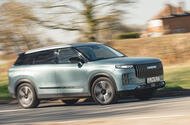
It’s not the easy prey at the bottom but some mid-market stalwarts that are losing out
On the face of it, the UK new car market is a land of milk and honey again for car makers selling here, with sales up nearly 10% year on year.
Given that increase, you’d expect to see general growth across the board – or at least no worse than standing still – but the volume of new entrants from China means there are a significant amount of losers.
Patterns are now emerging and the mid-market is where the action is happening for Chinese brands and where the impact is being felt by established car makers.
There are five brands who are really making an impact on the UK and have sold more than 20,000 cars here so far this year: BYD, Chery, Jaecoo, MG and Omoda. They’ve captured around 180,000 of the UK’s nearly 1.3 million new car sales this year, which is around 14% of the market.
Add in Leapmotor and Geely and you’re pushing the 200,000 mark. Everyone else from China – Changan, GWM, Aion, Xpeng – is for now making up the numbers.
The sales success of those five brands has demonstrated that China can sell cars at significant volumes, and not all of those sales are additive.
It’s the mid-market stalwarts – those operating a level below the very biggest sellers in the UK – that have seen their sales dip the most, with an obvious pattern.
Nissan‘s sales are down almost 16% this year, Hyundai‘s almost 9% and Peugeot‘s 15%. These are brands that have so far sold just under or over 50,000 cars in the UK this year, a similar volume to BYD and MG.
At a couple of rungs below at around the 20,000 volume, Chery and Omoda have pushed ahead of Honda and Mazda, which have recorded 16% and 21% drops respectively this year.
Above the middle market, and into the upper echelons of the UK car sales, the drops are smaller: Volkswagen, Ford and BMW have had small single-digit drops while Audi and Kia have managed to increase sales, albeit not at the same pace of growth of the market overall. China is having an impact there but currently it is not a crisis. Standing still here is progress of sorts. For now…
It’s hard to get too much of a read on what impact China is having on the smaller players in the market – the likes of Alfa Romeo, DS and Jeep, for example – because their sales are so relatively small and other factors can cause them to spike them up or down, making China more likely an excuse than a reason.
China is having success in the mid-market by offering a lot of car for not a lot of money. Heavily leaning toward electric models, Chinese brands aren’t bogged down by the ZEV mandate targets that legacy car makers are wrestling with.
Crucially, they also enjoy far lower production costs. That makes aggressive fleet discounting or non-retail giveaway deals viable for them, where it would be financial suicide for legacy players.
The mid-market has long felt the squeeze from those both above and below it, but China is a different kind of threat because its marques enter with brand and badge neutrality; you don’t know what you’re going to get from a BYD but you recognise its best cars as being cheap without feeling cheap.
What is Nissan beyond the Qashqai? Name three cars from the Honda range. What’s the best-selling Peugeot? Try and spot a Hyundai when you take the badge off the bonnet. What was the last new Mazda?
The mid-market isn’t a total struggle in the UK for established players: Vauxhall, Renault and Skoda are doing well. They also feel like brands that have a plan and an identity, with a centre of gravity in their ranges, be it the small EVs from Renault, the SUV consistency from Skoda, or the value push from Vauxhall.
But the question has long been asked about who the losers will be when the Chinese car industry starts to sell at volume overseas. Now, we’re starting to see those who are feeling the pain.