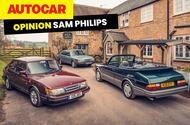
Saab launched relatively few cars in 71 years – but most of them were great
Are you familiar with the American sitcom The Goldbergs? No, me neither. But there is a brilliant snippet from one episode doing the rounds on social media that resonates with me.
As miserable teen Erica munches through a tray of brownies after being dumped by her boyfriend, her mum attempts to lighten the mood by suggesting that she go on a date with another chap called Bruce, who she says “drives a way cooler car than Drew”. “Cooler than a Mustang 5.0?” asks Erica, cynically. “Yes!” replies Beverly. “A Saab.”
She’s right, of course, even if Erica isn’t entirely convinced: “A Saab? What the hell is that?!” But anyone who knows their onions knows that Saabs are proper thinking man’s cars: clever, stylish and brilliantly engineered. Which is why I’m still holding out for a comeback.
This much-missed brand always did things differently. ‘Only one aircraft manufacturer makes cars’ was the strapline for one of its racy, jet fighter-inspired adverts, and this wasn’t just marketing fluff: Saabs of yore really did tap into the aeronautical side of the business, employing wraparound windscreens, aerodynamically honed bodywork and the iconic ignition barrel between the seats.
Through the 1980s and 1990s, off-the-wall cars like the 90 and 900 Turbo aimed to lure executive buyers away from the comparatively predictable alternatives on offer in the BMW, Mercedes and Audi dealerships, with striking styling, bombproof mechanicals and satisfying dynamics among their commendable attributes.
Saab’s premium focus, though, meant high development costs and low volumes, so it was haemorrhaging cash in its later years, almost collapsing in 1989. Thankfully a deal was struck with General Motors, which bought a controlling 50% stake in the company.
But this was not to be a happy marriage. Saab initially agreed to rebody and rebadge Vauxhalls for its future models but soon realised that they simply weren’t good enough to compete with the German stalwarts it had always chased, so ignored the high-ups in Detroit and did their own thing.
The first-gen 9-3, for example, was meant to basically be a Vectra with a different badge but ended up being so bespoke that it had a shorter wheelbase and even its own sat-nav system. Such shenanigans got Saab into trouble, and GM made its frustrations clear by delaying the 9-3 and canning the inbound 9-5, which would have used a Saab-developed platform.
Ultimately these were blows from which Saab never recovered. Shortly before its demise, the company rushed the second-generation 9-5 into dealerships before it was even finished. Autocar’s road testers awarded it only two stars, labelling it entirely uncompetitive with the better-rounded Skoda Superb and Volvo S80.
Despite its pitiful verdict, I would really like one with the 2.8-litre petrol V6. I don’t fancy the £760 annual tax bill, but there’s an unassuming classlessness to its design that means it still looks chic today. Maybe I’d better settle for a 900 Turbo (preferably a 16 S variant) with those glorious 16in turbine wheels.
I imagine that if Saab were still alive today, it would have a similar vibe to compatriot Polestar. Its cars would be suave, refined and loaded with tech – positioned as the four-wheeled equivalent of today’s Gripen E fighter jet.
Saab’s greatest trait was its unwillingness to accept low effort. If its engineers or designers didn’t like something, they made it better – and who could possibly fault them for that? Well, apart from its accountants…