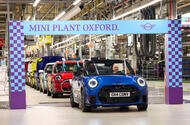
Oxford factory is key to Mini’s image but also brings high costs
As parent company BMW hits headwinds, Mini’s resilience comes into question
Amid all the talk of cost-cutting on BMW’s recent earnings call, there was a moment of awkwardness when one analyst asked whether the Mini brand should be given the chop: “It looks to me that Mini is loss-making. Is that a brand BMW really needs long term?”
Unusually, the head of the brand was actually on the call. Stefan Richmann was fielding questions in his other role as group treasurer, but instead of answering he got mock offended. “That hurt me personally,” he said, without clarifying whether the pain arose from an accurate hit or the mere suggestion.
BMW doesn’t separate out Mini or Rolls-Royce finances, leaving banking analysts to guess, but questions about Mini’s profitability have long swirled. In normal times, BMW has the luxury of a healthy group profit margin, but woes in China have cut that to 3.6% in the first half of the year, putting fresh focus on Mini.
Mini is an enigma, with a negative to every positive. Sales are thriving, rising 12% in the first half year to 149,535 on the back of demand for the Countryman SUV and Cooper hatchbacks. But the brand is tied to high production costs in Britain (ICE hatchbacks and Convertible) and Germany (Countryman). The Cooper and Aceman EVs are built in low-cost China but attract punitive EU import tariffs on Chinese-built EVs.
Mini rules the premium small car market, but true competitors are few and far between, suggesting it’s not easy to compete with volume players. Most recently, Audi axed the rival A1.
Mini has also aced the EV transition, 37% of its global sales in the first half of 2026 being electric. But with battery costs still elevated, that success also reduces its profitability.
Perhaps it’s telling that, within the BMW Group, Mini is leading the move to direct sales, a key cost-saver. By selling directly to customers, Mini can charge a single, country-wide price and theoretically reduce discounting. Mini rolled this out in China in 2023, and the BMW brand will now move to the so-called agency model from 2027.
A worldwide brand like Mini is just too small to thrive within the new global rules. The newly tariff-imposing US is too niche a market to justify moving manufacturing there. China’s future both as a market and an export base is too uncertain. And EU emissions rules threaten its profit margins without a move to lower-cost production locations like Hungary.
BMW is unlikely to drop the Mini brand, but a heavy reworking surely awaits.