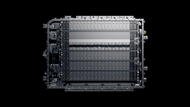
Advanced pack will be launched next year and give hybrid owners a “BEV-like” experience
Tech firm CATL has developed a new battery pack that is claimed to give plug-in hybrids as much as 249 miles of electric range.
This figure produced by the Freevoy Super Hybrid Battery beats some fully-electric cars such as the Peugeot e-208 and new Skoda Elroq.
Developed specifically for PHEVs, the pack also increases charging capability and cold weather efficiency compared to packs fitted to current cars, the firm says.
It will launch next year and will give hybrid owners a “BEV-like” experience, the Chinese firm claims. The first models to use it will be from Li Auto and Changan’s Avatr and Nevo brands, with other manufacturers set to follow, according to CATL (Contemporary Amprex Technology Limited).
It is the third pack launched by the tech firm, the other two being for fully electric vehicles. Clients include Volvo, BMW, Ford, MG and Tesla – the latter its biggest client. It is the third pack launched by the tech firm, the other two being for fully electric vehicles.
CATL’s latest creation uses a sodium-lithium chemical compound to balance energy density. This can achieve a maximum range of 249 miles, the firm claims, albeit without providing details of the size or energy capacity of the new pack used in its example.
This claimed figure – which is thought to have been calculated by the favourable China Light-Duty Vehicle Test Cycle – is almost three times what the Polestar 1, the PHEV with the best electric only range on sale, can currently offer: 93 miles via the European WLTP standard.
CATL says the new battery has been designed to meet the growing demand for PHEV models that rely more on the electric motor than internal combustion engine for propulsion and charging.
One of the key breakthroughs in the Freevoy battery is its ability to charge quickly. With a 4C charging rate, the battery can achieve 174 miles of range after just 10 minutes of charging, says CATL.
This development comes in response to what CATL sees as a critical gap in the market; many existing PHEVs offer relatively small battery capacities, forcing frequent charges and, thereby, reducing the overall lifespan of the battery when the vehicle is run in electric mode.
“Many hybrid drivers want to use more electricity and less fuel, but current [PHEV] models often prioritize the [internal combustion engine],” a CATL spokesperson explained.
“Our new battery addresses this by extending electric range and providing faster charging, while also performing well in extreme temperatures.”
The Freevoy battery is built to operate in temperatures as low as -40°C and maintaining charging functionality at -30°C. CATL says users can expect a charging experience comparable to normal temperatures at -20°C.