As the Blue Oval rejoins the grid, we look back at the most successful engine in F1 history
Powering 155 race wins, 12 drivers’ and 10 constructors’ titles, the Ford-Cosworth DFV (Double Four Valve) is the greatest engine in Formula 1 history. And the deal that put the Blue Oval on its cover might be the biggest bargain in the history of the sport.
The DFV was born when Lotus boss Colin Chapman was looking for a firm to replace long-time partner Coventry Climax, which had chosen not to build a unit for 1966’s new 3.0-litre F1 rules.
Former Lotus gearbox engineer Keith Duckworth had just founded Cosworth with Mike Costin and reckoned they could produce a competitive engine with £100,000 of investment.
Ford of Britain’s PR chief, Walter Hayes, spotted an opportunity and persuaded the company’s board to stump up the cash.
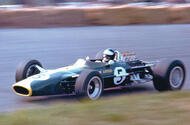
Jim Clark won on the engine’s debut in the 1967 Dutch Grand Prix, and the DFV quickly became the choice of the privateer squads. In the 1969 and 1973 seasons, a DFV-powered car won every race.
The 1980s turbo era marked the end of the DFV’s dominance, with its final win claimed by Tyrrell’s Michele Alboreto in the 1983 Detroit Grand Prix. Subsequent Ford-Cosworth engines weren’t so successful, with the high being Michael Schumacher’s 1994 title, in which he won eight of 16 races in a Benetton powered by an EC Zetec-R.
Ford’s final win was an opportunistic success for Jordan’s Giancarlo Fisichella in the 2003 Brazilian Grand Prix. While the DFV was a bargain, Ford’s ownership of its own squad emphatically was not.
In 2000, the firm bought Stewart Grand Prix and rebranded it Jaguar Racing.
Despite heavy investment, it claimed just two podiums in five seasons before Ford cut its losses and sold the team at the end of 2004 to energy drinks firm Red Bull. Yes – the team Ford now returns to the grid with.